
Power Pages Server Logic Reaches Production: What Enterprise Teams Need to Know
Juan Carlos Santiago
Power Pages Server Logic Reaches Production: What Enterprise Teams Need to Know
Microsoft has officially transitioned Server Logic in Power Pages from preview to general availability, marking a significant maturity milestone for the platform. This evolution signals that Power Pages is becoming increasingly capable of supporting mission-critical business applications at scale.
What Changed and Why It Matters
When Server Logic was initially introduced as a preview feature, it represented a fundamental shift in how developers could architect Power Pages solutions. The transition to GA isn't merely about checking a box—it reflects genuine progress in reliability, security governance, and integration capabilities. Organizations that have been waiting in the wings for enterprise-grade assurances now have the green light to move forward with confidence.
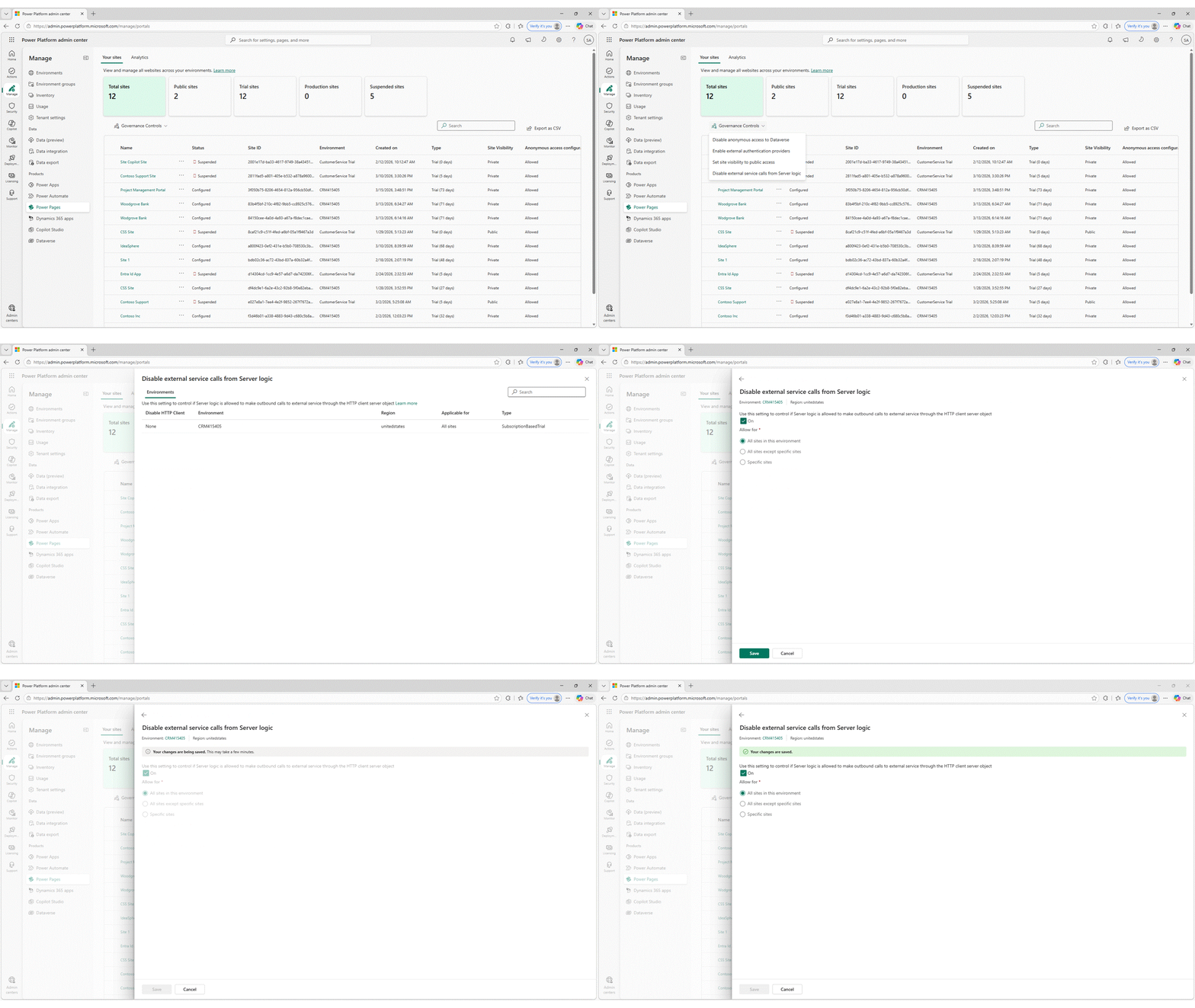
The two headline features accompanying this GA announcement deserve close attention. First, administrators can now enforce policies that prevent outbound external calls from server-side logic. This governance control addresses a real pain point for enterprises operating in regulated industries or with strict security protocols. Financial institutions, healthcare providers, and government agencies often face compliance mandates that require visibility and control over external connectivity. This capability ensures Power Pages doesn't become a compliance liability.
Second, the support for unbound Dataverse custom actions represents a meaningful expansion of what's possible within Power Pages. Unbound actions aren't tied to specific records—they're reusable components that can be invoked across your entire Dataverse ecosystem. This opens doors for cleaner, more maintainable code and encourages development patterns that emphasize reusability and modularity.
My Take: The Strategic Importance
What excites me about this release is the underlying philosophy. Microsoft isn't just adding features; they're demonstrating a commitment to treating Power Pages as a legitimate alternative to traditional web development frameworks for certain use cases. By prioritizing governance controls and extensibility, they're signaling that power and responsibility go hand in hand.
For organizations currently evaluating low-code platforms, this is an important inflection point. Power Pages is shedding its "simple portal" reputation and evolving into a serious contender for complex, security-conscious applications. Teams building customer-facing solutions that require server-side logic can now consider Power Pages without architectural compromises.
However, the emphasis on these particular features also hints at what customers have been requesting. The governance controls suggest that earlier versions gave teams insufficient oversight. The unbound actions support indicates that extensibility boundaries were previously constraining real-world scenarios. These GA enhancements address legitimate feedback from the community.
Practical Implications
For practitioners, this means several things:
- Security reviews just got easier: You can now demonstrate compliance with policies restricting external API calls
- Code reusability improves: Unbound actions encourage better architectural patterns
- Governance overhead decreases: Built-in controls reduce manual compliance workarounds
If you've been prototyping Power Pages solutions or testing server logic in limited scenarios, GA status provides the confidence needed for broader rollout. This is Microsoft telling you the platform is ready for the demands of production workloads.
The path forward for Power Pages continues to strengthen. Whether you're enhancing an existing portal or architecting something new, these capabilities make it worth reconsidering what's possible within the platform.
Source: Announcing General Availability (GA) of Server Logic in Power Pages